

Electricity is one of the largest operating expenses for many industries, commercial establishments, and infrastructure projects. Yet, despite its financial significance, many organizations treat the monthly electricity bill as just another routine payment.
The reality is that the amount you pay each month is influenced by much more than the number of units consumed. Understanding these costs can help businesses improve profitability, strengthen competitiveness, and make better energy decisions.
Electricity Costs Are More Than Energy Consumption
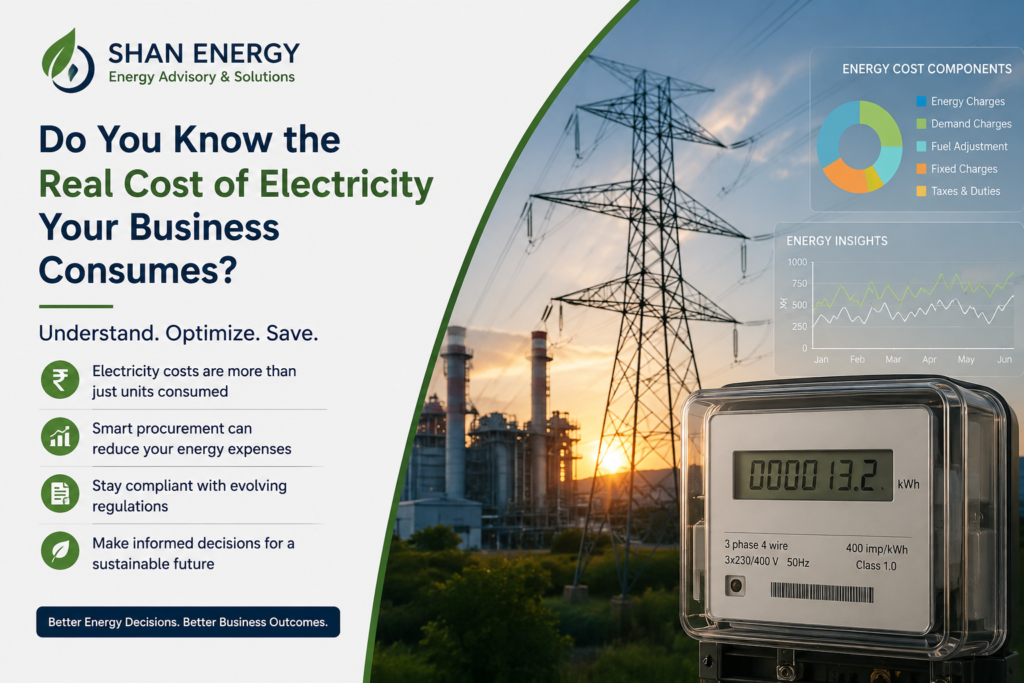
A commercial or industrial electricity bill consists of several cost components. Along with energy charges, businesses may also pay demand charges, fixed charges, fuel adjustment charges, electricity duty, and other statutory levies.
In many cases, these components have a greater impact on the final bill than expected. Simply reducing electricity consumption may not always result in the lowest possible cost.
Understanding how your bill is structured is the first step toward effective energy cost management.
Every Business Has Different Energy Requirements
No two businesses consume electricity in the same way
A manufacturing facility operating around the clock has very different requirements from a commercial building, hospital, data center, or educational institution.
The most economical electricity procurement strategy depends on several factors, including:
- Connected load and contract demand
- Consumption pattern
- Operating hours
- State electricity regulations
- Availability of renewable energy options
- Long-term business objectives
Selecting the appropriate electricity procurement model can significantly influence operating costs.
The Electricity Market Has Changed
Businesses today have more choices than ever before.
Depending on eligibility and applicable regulations, organizations may explore options such as:
- Distribution company supply
- Green Open Access
- Captive and Group Captive arrangements
- Renewable Energy Purchase Agreements (PPAs)
- Electricity procurement through power exchanges
Each option offers different commercial, regulatory, and operational considerations. Evaluating these alternatives carefully is essential before making long-term commitments.
Compliance Is Equally Important
Electricity regulations continue to evolve.
Changes in tariff orders, Open Access regulations, Renewable Consumption Obligations (RCO), renewable energy policies, and sustainability requirements can directly affect business operations.
Regular reviews of electricity procurement strategies and regulatory compliance help organizations reduce commercial risks and avoid unnecessary costs.
Data Drives Better Decisions
Electricity generates valuable operational data.
Analyzing consumption trends, demand profiles, seasonal variations, and billing patterns enables organizations to identify inefficiencies and uncover opportunities for improvement.
Better decisions are built on better information.
Final Thoughts
Electricity should no longer be viewed simply as a monthly utility bill. It is a strategic business input that deserves the same level of attention as raw materials, logistics, and finance.
Organizations that understand how they consume, purchase, and manage electricity are better positioned to reduce costs, improve operational efficiency, and adapt to an evolving energy landscape.
At Shan Energy, we help businesses navigate electricity markets, optimize energy costs, understand regulations, and make informed energy decisions through independent advisory services.